1316 results with digital objects
Show results with digital objects
CERN-ARCH-DG-LM-02-001 to 053
·
Series
·
01/01/1974-31/12/2004
Part of Luciano Maiani
These documents represent the filing system of Luciano Maiani during his period as Director-General of CERN. They cover all aspects of CERN's activities, and include:
- relations with the Delegations and other collaborations,
- relations with the management and committees,
- personnel matters,
- health and safety. Finance. Research
- conferences and visits
- correspondence
CERN-ARCH-DG-LM-02-001 to 053
·
Series
·
01/01/1974-31/12/2004
Part of Luciano Maiani
These documents represent the filing system of Luciano Maiani during his period as Director-General of CERN. They cover all aspects of CERN's activities, and include:
- relations with the Delegations and other collaborations,
- relations with the management and committees,
- personnel matters,
- health and safety. Finance. Research
- conferences and visits
- correspondence
CERN-ARCH-DG-LM-02-001 to 053
·
Series
·
01/01/1974-31/12/2004
Part of Luciano Maiani
These documents represent the filing system of Luciano Maiani during his period as Director-General of CERN. They cover all aspects of CERN's activities, and include:
- relations with the Delegations and other collaborations,
- relations with the management and committees,
- personnel matters,
- health and safety. Finance. Research
- conferences and visits
- correspondence
CERN-OBJ-IT-013
·
Item
Part of Heritage Collection
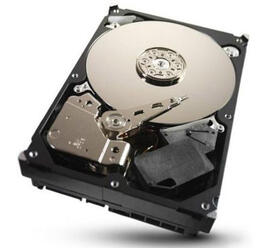
This particular object was used up until 2012 in the Data Centre. It slots into one of the Disk Server trays. Hard disks were invented in the 1950s. They started as large disks up to 20 inches in diameter holding just a few megabytes (link is external). They were originally called "fixed disks" or "Winchesters" (a code name used for a popular IBM product). They later became known as "hard disks" to distinguish them from "floppy disks (link is external)." Hard disks have a hard platter that holds the magnetic medium, as opposed to the flexible plastic film found in tapes and floppies.
CERN-OBJ-IT-013
·
Item
Part of Heritage Collection Test
This particular object was used up until 2012 in the Data Centre. It slots into one of the Disk Server trays. Hard disks were invented in the 1950s. They started as large disks up to 20 inches in diameter holding just a few megabytes (link is external). They were originally called "fixed disks" or "Winchesters" (a code name used for a popular IBM product). They later became known as "hard disks" to distinguish them from "floppy disks (link is external)." Hard disks have a hard platter that holds the magnetic medium, as opposed to the flexible plastic film found in tapes and floppies.
CERN-ARCH-DIR-RES-02-1-3-01 to 34
·
Sub-series
·
1987-2003
Part of Directors of Research
The collection "Directors of Research" contains files concerning construction, equipment and experiments on the SC machine (Synchro-Cyclotron), the PS machine (Proton Synchrotron), the SPS machine (Super Proton Synchrotron), the LEP machine (Large Electron Positron) and the LHC machine (Large Hadron Collider). Some other files talk about computing & networks management and scientific & technical cooperation. The Synchro-Cyclotron The 600 MeV synchro-cyclotron was the first accelerator built at CERN. Originally, it was conceived as an intermediate device until the PS was operational and to train European physicists on big accelerators. It was commissioned successfully in 1957, with its first proton beam : this date can be regarded as the starting point of the active scientific life of the organisation. It was used for experiments stretching from particle physics to nuclear physics and chemistry, and a large number of teams performed their first experiments at CERN. Rapidly, the SC machine established itself as a research tool in its own right with an important particle physics and nuclear structure programme using muons and pions. In parallel, it supported ISOLDE, commissioned in 1967, a facility in which an isotope separator for studying radio-active elements was placed on-line with the extracted proton beam of the machine. Particle physics experiments constituted the first real scientific successes for CERN. The SC machine was closed in 1990. The Proton Synchrotron The 28 GeV proton synchrotron was a proton accelerator that came into operation in 1959 at CERN. It was a gigantic machine for that time. With it, a completely new energy range would be opened up and CERN was to become the place where European high energy physics would be done in the years to come. European scientists would work under conditions comparable to those in the United States. Space in the North and South experimental halls were equipped with six bubble chambers (hydrogen) and the East hall was commissioned in 1963 to accommodate all this equipment and a programme of electronics experiments. In 1970, a new bubble chamber (heavy liquids), called Gargamelle, was commissioned at CERN. Conceived by Lagarrigue in 1964, its construction started under the general supervision of CEA Saclay at the end of 1965. It was installed in the South-East Area. In 1973, it made one of CERN's major physics discoveries, the "neutral current" a new kind of particle interaction. Filled with 18 tons of heavy liquid (neon or propane), it recorded the rare interactions of elusive particles called neutrinos. In 1976, CERN decided to move Gargamelle to the West Area for experiments with the SPS machine. After some repairs, the bubble chamber was again operational in September 1977. Gargamelle was stopped in 1979 because of a heavy programme of repairs. Another major device was initiated by CERN in 1968 : the Omega spectrometer. It was completely separate from the accelerator which provides it with beams of particles. It combined a superconducting magnet with a variety of electronic detectors (spark chambers, Cerenkov counters,...). Initially built to work with the PS machine, it produced its first results in 1972. Then, it became one of the principle experimental facilities of the SPS machine. Mirabelle is a French bubble chamber installed in the Institute of High Energy near Serpukhov (USSR). In 1970, CERN decided on the construction of the fast ejection system and a particle separator to be used with the PS machine of this Institute ; in exchange, CERN could propose and execute experiments with the French bubble chamber. This equipment was commissioned in 1972. Kaons and antiprotons could be separated to provide beams with a high level of purity for experiments in Mirabelle In 1973, BEBC (Big European Bubble Chamber) (hydrogen) was commissioned in the West hall. It used very new technologies, especially for the magnet (superconductivity). It was filled with 30 cubic meters of liquefied gas, and recorded the interactions of elementary particles. The sensitivity of the liquid gas was controlled by a huge piston. Each time the piston expanded, a burst of particles was photographed. The BEBC produced 3 000 kilometers of film. As from 1977, BEBC carried out experiments with the SPS machine (WA experiments). In 1980, in view of the availability of beams of antiprotons, CERN approved the construction of LEAR (Low Energy Antiproton Ring). This new device was ready in 1982, in the South hall of the PS machine. This ring was used to provide a stable antiproton stream. It received antiprotons issued from the antiproton accumulator and decelerated in the PS machine. The successful completion of this project opened a new field at CERN to a different range of experiments and experimenters. The same year, the EHS (European Hybrid System) was ready. Included in the SPS programme, it was a particle detector which aimed to combine the technologies of bubble chambers and spectrometers in such a way as to maximize the advantages of each technique and minimize their inconveniences. Essentially it consists of a rapid cycling bubble chamber as the target and detector and a series of particle detectors. The Super Proton Synchrotron 1976 is the date of the start of operation of the fourth accelerator of CERN. The 400 GeV super proton synchrotron is a circular accelerator, 7 km in circumference, buried underground. It was built originally to accelerate protons - and still does so - but it has since operated as a proton-antiproton collider, a heavy-ion accelerator, and an electron/positron injector for LEP. As a proton-antiproton collider in the 1980s, it provided CERN with one of its greatest moments - the first observations of the W and Z particles, the carriers of the weak force. Various experiments are carried out using the SPS. The NA experiments correspond to detectors installed in the North Area, in Prevessin (the French site of CERN). The WA experiments (West Area) are carried out on the site of Meyrin. Emulsion Experiments (EMU) were associated with some of the NA or WA experiments. In June 1978, a project for operation with colliding beams of protons and antiprotons was approved : the ppbar Committee was responsible for the design of the experimental area to locate the future UA experiments in the long straight-section 5 in the SPS tunnel. The Large Electron Positron Collider In 1985, the Kendrew committee produced a report on the future of British participation at CERN. It suggested that Britain should reduce its contribution to CERN. In 1986, a committee of eminent Europeans nominated the Abragam Committee (external scientists and industrialists) to investigate CERN to prepare the administrative modernisation of the Organisation and the staff policy. Another workgroup, presided over by Carlo Rubbia, studied the scientific and technological future of the Laboratory. These two committees validated the program of research and plans about the future of CERN, particularly for the LEP. When the LEP machine began operation in the summer of 1989. It was the largest particle collider in the world. In a ring 27 km in circumference, buried about 100 m underground, bunches of electrons and positrons (antielectrons) race round in opposite directions as they are accelerated to almost the speed of light. OPAL and DELPHI were the two first detectors to be approved by CERN in 1982 for the future LEP; then came ALEPH and L3, which had been approved by the CERN in 1982 for the future LEP. OPAL (Omni-Purpose Apparatus for LEP) was a classic polyvalent detector. Commissioned in 1989, it used tested detector techniques. DELPHI (DEtector with Lepton Photon and Hadron Identification), ready in 1989-1990, was a special detector used to identity leptons, photons and hadrons. It incorporates a technology which had never been used on a large scale. ALEPH (Apparatus for LEP pHysics) was a solid-state microstrip detector and the simplest of the detectors : it had a minimum of components and emphasized performance and reliability. It was installed closest to the collision region to give information on very short-lived particles. L3 (which drew its name from being the subject of the third letter of intent for a LEP experiment) was the largest of the detectors and was distinguished by having its magnet on the outside of the detector volume. It aimed for great accuracy in many of its measurements on the particles emerging from the collisions. The LAA project (Lepton Asymmetry Analyser) was approved by CERN in 1986. This compact fast tracking detector, using very small diameter scintillating optical fibres with a novel electro-optical readout, aimed the development of new detection techniques in future hadron colliders. In 1989, a first CERN / ESA (European Space Agency) workshop was proposal with the Olympus programme. It was an experimental communications satellite, a project on physics data distribution by satellite. In 1990, the satellite project was named Cheops. Large Hadron Collider In December 1994, the CERN Council officially approved the construction of CERN's Large Hadron Collider (LHC) - a technologically challenging superconducting ring, which will be installed in the existing LEP tunnel - to provide proton-proton collisions at energies 10 times greater than any previous machine. In keeping with CERN's cost-effective strategy of building on previous investments, it is designed to share the 27-kilometre LEP tunnel, and be fed by existing particle sources and pre-accelerators. The LHC will use the most advanced superconducting magnet and accelerator technologies ever employed. ATLAS (A Toroidal LHC ApparatuS) is an experiment for recording proton-antiproton collisions at the LHC. The detector design has been optimized to cover the largest possible range of LHC physics. Its goal is to explore the fundamental nature of matter and the basic forces that shape our universe. Its is the largest collaborative effort ever attempted in the physical sciences (150 participating institutions in 2000). CMS (Compact Muon Solenoid) is, with ATLAS, the largest polyvalent detector of the LHC. It will identify and measure muons in the outer layers of the detector, which requires a strong magnetic field inside the detector. ALICE (A Large Ion Collider Experiment) became the third collaboration approved the same year, but with different goals : the LHC will accelerate not only protons, but also the high energy beams of lead-ions currently in use by SPS experiments. It is this capacity which ALICE is designed to exploit as the LHC's only dedicated heavy-ion experiment. The LHCb (Large hadron Collider beauty) is the fourth detector, designed to catch low angle particles. Its key elements will be its measurement of charged particle tracks, and its ability to identify different kinds of particles. Totem is an experiment dedicated to the measurement of total cross section, elastic scattering and diffractive processes at the LHC. Computing & networks management The Data Handling Division of CERN (DD) provides off-line programming support for a number of experiments thanks to a Computer Centre with several central computing services like IBM and DEC and specialized computing services. This support is organized by the Computer Time Allocation Group (Cocotime). In 1990, Data Handling Division became Computing and Networks Division (CN) until 1998, when his name changed again to Information Technology Division (IT). Scientific and technical cooperations In 1989, the U.S. Department of Energy (DOE) proposed to build a Superconducting Super Collider (SSC) in order to maintain its leadership position in the scientific field of high energy physics. It was installed in Dallas. In 1991, CERN and SSC Laboratory decided to define areas of mutual scientific and technical cooperation. Finally the USA abandoned the SSC. In 1993, four universities (Grenoble (2), Karlsruhe and Darmstadt) proposed the creation of a European Scientific Institute, installed in Archamps to profit from the proximity of physicists and accelerator technologies of CERN. The CERN Accelerator School agreed to help in forming the programme of lectures and selecting the CERN lecturers.
Lohrmann, Erich
CERN-ARCH-DIR-RES-02-2-3-01 to 27
·
Sub-series
·
1987-2003
Part of Directors of Research
The collection "Directors of Research" contains files concerning construction, equipment and experiments on the SC machine (Synchro-Cyclotron), the PS machine (Proton Synchrotron), the SPS machine (Super Proton Synchrotron), the LEP machine (Large Electron Positron) and the LHC machine (Large Hadron Collider). Some other files talk about computing & networks management and scientific & technical cooperation. The Synchro-Cyclotron The 600 MeV synchro-cyclotron was the first accelerator built at CERN. Originally, it was conceived as an intermediate device until the PS was operational and to train European physicists on big accelerators. It was commissioned successfully in 1957, with its first proton beam : this date can be regarded as the starting point of the active scientific life of the organisation. It was used for experiments stretching from particle physics to nuclear physics and chemistry, and a large number of teams performed their first experiments at CERN. Rapidly, the SC machine established itself as a research tool in its own right with an important particle physics and nuclear structure programme using muons and pions. In parallel, it supported ISOLDE, commissioned in 1967, a facility in which an isotope separator for studying radio-active elements was placed on-line with the extracted proton beam of the machine. Particle physics experiments constituted the first real scientific successes for CERN. The SC machine was closed in 1990. The Proton Synchrotron The 28 GeV proton synchrotron was a proton accelerator that came into operation in 1959 at CERN. It was a gigantic machine for that time. With it, a completely new energy range would be opened up and CERN was to become the place where European high energy physics would be done in the years to come. European scientists would work under conditions comparable to those in the United States. Space in the North and South experimental halls were equipped with six bubble chambers (hydrogen) and the East hall was commissioned in 1963 to accommodate all this equipment and a programme of electronics experiments. In 1970, a new bubble chamber (heavy liquids), called Gargamelle, was commissioned at CERN. Conceived by Lagarrigue in 1964, its construction started under the general supervision of CEA Saclay at the end of 1965. It was installed in the South-East Area. In 1973, it made one of CERN's major physics discoveries, the "neutral current" a new kind of particle interaction. Filled with 18 tons of heavy liquid (neon or propane), it recorded the rare interactions of elusive particles called neutrinos. In 1976, CERN decided to move Gargamelle to the West Area for experiments with the SPS machine. After some repairs, the bubble chamber was again operational in September 1977. Gargamelle was stopped in 1979 because of a heavy programme of repairs. Another major device was initiated by CERN in 1968 : the Omega spectrometer. It was completely separate from the accelerator which provides it with beams of particles. It combined a superconducting magnet with a variety of electronic detectors (spark chambers, Cerenkov counters,...). Initially built to work with the PS machine, it produced its first results in 1972. Then, it became one of the principle experimental facilities of the SPS machine. Mirabelle is a French bubble chamber installed in the Institute of High Energy near Serpukhov (USSR). In 1970, CERN decided on the construction of the fast ejection system and a particle separator to be used with the PS machine of this Institute ; in exchange, CERN could propose and execute experiments with the French bubble chamber. This equipment was commissioned in 1972. Kaons and antiprotons could be separated to provide beams with a high level of purity for experiments in Mirabelle In 1973, BEBC (Big European Bubble Chamber) (hydrogen) was commissioned in the West hall. It used very new technologies, especially for the magnet (superconductivity). It was filled with 30 cubic meters of liquefied gas, and recorded the interactions of elementary particles. The sensitivity of the liquid gas was controlled by a huge piston. Each time the piston expanded, a burst of particles was photographed. The BEBC produced 3 000 kilometers of film. As from 1977, BEBC carried out experiments with the SPS machine (WA experiments). In 1980, in view of the availability of beams of antiprotons, CERN approved the construction of LEAR (Low Energy Antiproton Ring). This new device was ready in 1982, in the South hall of the PS machine. This ring was used to provide a stable antiproton stream. It received antiprotons issued from the antiproton accumulator and decelerated in the PS machine. The successful completion of this project opened a new field at CERN to a different range of experiments and experimenters. The same year, the EHS (European Hybrid System) was ready. Included in the SPS programme, it was a particle detector which aimed to combine the technologies of bubble chambers and spectrometers in such a way as to maximize the advantages of each technique and minimize their inconveniences. Essentially it consists of a rapid cycling bubble chamber as the target and detector and a series of particle detectors. The Super Proton Synchrotron 1976 is the date of the start of operation of the fourth accelerator of CERN. The 400 GeV super proton synchrotron is a circular accelerator, 7 km in circumference, buried underground. It was built originally to accelerate protons - and still does so - but it has since operated as a proton-antiproton collider, a heavy-ion accelerator, and an electron/positron injector for LEP. As a proton-antiproton collider in the 1980s, it provided CERN with one of its greatest moments - the first observations of the W and Z particles, the carriers of the weak force. Various experiments are carried out using the SPS. The NA experiments correspond to detectors installed in the North Area, in Prevessin (the French site of CERN). The WA experiments (West Area) are carried out on the site of Meyrin. Emulsion Experiments (EMU) were associated with some of the NA or WA experiments. In June 1978, a project for operation with colliding beams of protons and antiprotons was approved : the ppbar Committee was responsible for the design of the experimental area to locate the future UA experiments in the long straight-section 5 in the SPS tunnel. The Large Electron Positron Collider In 1985, the Kendrew committee produced a report on the future of British participation at CERN. It suggested that Britain should reduce its contribution to CERN. In 1986, a committee of eminent Europeans nominated the Abragam Committee (external scientists and industrialists) to investigate CERN to prepare the administrative modernisation of the Organisation and the staff policy. Another workgroup, presided over by Carlo Rubbia, studied the scientific and technological future of the Laboratory. These two committees validated the program of research and plans about the future of CERN, particularly for the LEP. When the LEP machine began operation in the summer of 1989. It was the largest particle collider in the world. In a ring 27 km in circumference, buried about 100 m underground, bunches of electrons and positrons (antielectrons) race round in opposite directions as they are accelerated to almost the speed of light. OPAL and DELPHI were the two first detectors to be approved by CERN in 1982 for the future LEP; then came ALEPH and L3, which had been approved by the CERN in 1982 for the future LEP. OPAL (Omni-Purpose Apparatus for LEP) was a classic polyvalent detector. Commissioned in 1989, it used tested detector techniques. DELPHI (DEtector with Lepton Photon and Hadron Identification), ready in 1989-1990, was a special detector used to identity leptons, photons and hadrons. It incorporates a technology which had never been used on a large scale. ALEPH (Apparatus for LEP pHysics) was a solid-state microstrip detector and the simplest of the detectors : it had a minimum of components and emphasized performance and reliability. It was installed closest to the collision region to give information on very short-lived particles. L3 (which drew its name from being the subject of the third letter of intent for a LEP experiment) was the largest of the detectors and was distinguished by having its magnet on the outside of the detector volume. It aimed for great accuracy in many of its measurements on the particles emerging from the collisions. The LAA project (Lepton Asymmetry Analyser) was approved by CERN in 1986. This compact fast tracking detector, using very small diameter scintillating optical fibres with a novel electro-optical readout, aimed the development of new detection techniques in future hadron colliders. In 1989, a first CERN / ESA (European Space Agency) workshop was proposal with the Olympus programme. It was an experimental communications satellite, a project on physics data distribution by satellite. In 1990, the satellite project was named Cheops. Large Hadron Collider In December 1994, the CERN Council officially approved the construction of CERN's Large Hadron Collider (LHC) - a technologically challenging superconducting ring, which will be installed in the existing LEP tunnel - to provide proton-proton collisions at energies 10 times greater than any previous machine. In keeping with CERN's cost-effective strategy of building on previous investments, it is designed to share the 27-kilometre LEP tunnel, and be fed by existing particle sources and pre-accelerators. The LHC will use the most advanced superconducting magnet and accelerator technologies ever employed. ATLAS (A Toroidal LHC ApparatuS) is an experiment for recording proton-antiproton collisions at the LHC. The detector design has been optimized to cover the largest possible range of LHC physics. Its goal is to explore the fundamental nature of matter and the basic forces that shape our universe. Its is the largest collaborative effort ever attempted in the physical sciences (150 participating institutions in 2000). CMS (Compact Muon Solenoid) is, with ATLAS, the largest polyvalent detector of the LHC. It will identify and measure muons in the outer layers of the detector, which requires a strong magnetic field inside the detector. ALICE (A Large Ion Collider Experiment) became the third collaboration approved the same year, but with different goals : the LHC will accelerate not only protons, but also the high energy beams of lead-ions currently in use by SPS experiments. It is this capacity which ALICE is designed to exploit as the LHC's only dedicated heavy-ion experiment. The LHCb (Large hadron Collider beauty) is the fourth detector, designed to catch low angle particles. Its key elements will be its measurement of charged particle tracks, and its ability to identify different kinds of particles. Totem is an experiment dedicated to the measurement of total cross section, elastic scattering and diffractive processes at the LHC. Computing & networks management The Data Handling Division of CERN (DD) provides off-line programming support for a number of experiments thanks to a Computer Centre with several central computing services like IBM and DEC and specialized computing services. This support is organized by the Computer Time Allocation Group (Cocotime). In 1990, Data Handling Division became Computing and Networks Division (CN) until 1998, when his name changed again to Information Technology Division (IT). Scientific and technical cooperations In 1989, the U.S. Department of Energy (DOE) proposed to build a Superconducting Super Collider (SSC) in order to maintain its leadership position in the scientific field of high energy physics. It was installed in Dallas. In 1991, CERN and SSC Laboratory decided to define areas of mutual scientific and technical cooperation. Finally the USA abandoned the SSC. In 1993, four universities (Grenoble (2), Karlsruhe and Darmstadt) proposed the creation of a European Scientific Institute, installed in Archamps to profit from the proximity of physicists and accelerator technologies of CERN. The CERN Accelerator School agreed to help in forming the programme of lectures and selecting the CERN lecturers.
Lohrmann, Erich
CERN-ARCH-DIR-RES-02-2-3-01 to 27
·
Sub-series
·
1987-2003
Part of Directors of Research
The collection "Directors of Research" contains files concerning construction, equipment and experiments on the SC machine (Synchro-Cyclotron), the PS machine (Proton Synchrotron), the SPS machine (Super Proton Synchrotron), the LEP machine (Large Electron Positron) and the LHC machine (Large Hadron Collider). Some other files talk about computing & networks management and scientific & technical cooperation. The Synchro-Cyclotron The 600 MeV synchro-cyclotron was the first accelerator built at CERN. Originally, it was conceived as an intermediate device until the PS was operational and to train European physicists on big accelerators. It was commissioned successfully in 1957, with its first proton beam : this date can be regarded as the starting point of the active scientific life of the organisation. It was used for experiments stretching from particle physics to nuclear physics and chemistry, and a large number of teams performed their first experiments at CERN. Rapidly, the SC machine established itself as a research tool in its own right with an important particle physics and nuclear structure programme using muons and pions. In parallel, it supported ISOLDE, commissioned in 1967, a facility in which an isotope separator for studying radio-active elements was placed on-line with the extracted proton beam of the machine. Particle physics experiments constituted the first real scientific successes for CERN. The SC machine was closed in 1990. The Proton Synchrotron The 28 GeV proton synchrotron was a proton accelerator that came into operation in 1959 at CERN. It was a gigantic machine for that time. With it, a completely new energy range would be opened up and CERN was to become the place where European high energy physics would be done in the years to come. European scientists would work under conditions comparable to those in the United States. Space in the North and South experimental halls were equipped with six bubble chambers (hydrogen) and the East hall was commissioned in 1963 to accommodate all this equipment and a programme of electronics experiments. In 1970, a new bubble chamber (heavy liquids), called Gargamelle, was commissioned at CERN. Conceived by Lagarrigue in 1964, its construction started under the general supervision of CEA Saclay at the end of 1965. It was installed in the South-East Area. In 1973, it made one of CERN's major physics discoveries, the "neutral current" a new kind of particle interaction. Filled with 18 tons of heavy liquid (neon or propane), it recorded the rare interactions of elusive particles called neutrinos. In 1976, CERN decided to move Gargamelle to the West Area for experiments with the SPS machine. After some repairs, the bubble chamber was again operational in September 1977. Gargamelle was stopped in 1979 because of a heavy programme of repairs. Another major device was initiated by CERN in 1968 : the Omega spectrometer. It was completely separate from the accelerator which provides it with beams of particles. It combined a superconducting magnet with a variety of electronic detectors (spark chambers, Cerenkov counters,...). Initially built to work with the PS machine, it produced its first results in 1972. Then, it became one of the principle experimental facilities of the SPS machine. Mirabelle is a French bubble chamber installed in the Institute of High Energy near Serpukhov (USSR). In 1970, CERN decided on the construction of the fast ejection system and a particle separator to be used with the PS machine of this Institute ; in exchange, CERN could propose and execute experiments with the French bubble chamber. This equipment was commissioned in 1972. Kaons and antiprotons could be separated to provide beams with a high level of purity for experiments in Mirabelle In 1973, BEBC (Big European Bubble Chamber) (hydrogen) was commissioned in the West hall. It used very new technologies, especially for the magnet (superconductivity). It was filled with 30 cubic meters of liquefied gas, and recorded the interactions of elementary particles. The sensitivity of the liquid gas was controlled by a huge piston. Each time the piston expanded, a burst of particles was photographed. The BEBC produced 3 000 kilometers of film. As from 1977, BEBC carried out experiments with the SPS machine (WA experiments). In 1980, in view of the availability of beams of antiprotons, CERN approved the construction of LEAR (Low Energy Antiproton Ring). This new device was ready in 1982, in the South hall of the PS machine. This ring was used to provide a stable antiproton stream. It received antiprotons issued from the antiproton accumulator and decelerated in the PS machine. The successful completion of this project opened a new field at CERN to a different range of experiments and experimenters. The same year, the EHS (European Hybrid System) was ready. Included in the SPS programme, it was a particle detector which aimed to combine the technologies of bubble chambers and spectrometers in such a way as to maximize the advantages of each technique and minimize their inconveniences. Essentially it consists of a rapid cycling bubble chamber as the target and detector and a series of particle detectors. The Super Proton Synchrotron 1976 is the date of the start of operation of the fourth accelerator of CERN. The 400 GeV super proton synchrotron is a circular accelerator, 7 km in circumference, buried underground. It was built originally to accelerate protons - and still does so - but it has since operated as a proton-antiproton collider, a heavy-ion accelerator, and an electron/positron injector for LEP. As a proton-antiproton collider in the 1980s, it provided CERN with one of its greatest moments - the first observations of the W and Z particles, the carriers of the weak force. Various experiments are carried out using the SPS. The NA experiments correspond to detectors installed in the North Area, in Prevessin (the French site of CERN). The WA experiments (West Area) are carried out on the site of Meyrin. Emulsion Experiments (EMU) were associated with some of the NA or WA experiments. In June 1978, a project for operation with colliding beams of protons and antiprotons was approved : the ppbar Committee was responsible for the design of the experimental area to locate the future UA experiments in the long straight-section 5 in the SPS tunnel. The Large Electron Positron Collider In 1985, the Kendrew committee produced a report on the future of British participation at CERN. It suggested that Britain should reduce its contribution to CERN. In 1986, a committee of eminent Europeans nominated the Abragam Committee (external scientists and industrialists) to investigate CERN to prepare the administrative modernisation of the Organisation and the staff policy. Another workgroup, presided over by Carlo Rubbia, studied the scientific and technological future of the Laboratory. These two committees validated the program of research and plans about the future of CERN, particularly for the LEP. When the LEP machine began operation in the summer of 1989. It was the largest particle collider in the world. In a ring 27 km in circumference, buried about 100 m underground, bunches of electrons and positrons (antielectrons) race round in opposite directions as they are accelerated to almost the speed of light. OPAL and DELPHI were the two first detectors to be approved by CERN in 1982 for the future LEP; then came ALEPH and L3, which had been approved by the CERN in 1982 for the future LEP. OPAL (Omni-Purpose Apparatus for LEP) was a classic polyvalent detector. Commissioned in 1989, it used tested detector techniques. DELPHI (DEtector with Lepton Photon and Hadron Identification), ready in 1989-1990, was a special detector used to identity leptons, photons and hadrons. It incorporates a technology which had never been used on a large scale. ALEPH (Apparatus for LEP pHysics) was a solid-state microstrip detector and the simplest of the detectors : it had a minimum of components and emphasized performance and reliability. It was installed closest to the collision region to give information on very short-lived particles. L3 (which drew its name from being the subject of the third letter of intent for a LEP experiment) was the largest of the detectors and was distinguished by having its magnet on the outside of the detector volume. It aimed for great accuracy in many of its measurements on the particles emerging from the collisions. The LAA project (Lepton Asymmetry Analyser) was approved by CERN in 1986. This compact fast tracking detector, using very small diameter scintillating optical fibres with a novel electro-optical readout, aimed the development of new detection techniques in future hadron colliders. In 1989, a first CERN / ESA (European Space Agency) workshop was proposal with the Olympus programme. It was an experimental communications satellite, a project on physics data distribution by satellite. In 1990, the satellite project was named Cheops. Large Hadron Collider In December 1994, the CERN Council officially approved the construction of CERN's Large Hadron Collider (LHC) - a technologically challenging superconducting ring, which will be installed in the existing LEP tunnel - to provide proton-proton collisions at energies 10 times greater than any previous machine. In keeping with CERN's cost-effective strategy of building on previous investments, it is designed to share the 27-kilometre LEP tunnel, and be fed by existing particle sources and pre-accelerators. The LHC will use the most advanced superconducting magnet and accelerator technologies ever employed. ATLAS (A Toroidal LHC ApparatuS) is an experiment for recording proton-antiproton collisions at the LHC. The detector design has been optimized to cover the largest possible range of LHC physics. Its goal is to explore the fundamental nature of matter and the basic forces that shape our universe. Its is the largest collaborative effort ever attempted in the physical sciences (150 participating institutions in 2000). CMS (Compact Muon Solenoid) is, with ATLAS, the largest polyvalent detector of the LHC. It will identify and measure muons in the outer layers of the detector, which requires a strong magnetic field inside the detector. ALICE (A Large Ion Collider Experiment) became the third collaboration approved the same year, but with different goals : the LHC will accelerate not only protons, but also the high energy beams of lead-ions currently in use by SPS experiments. It is this capacity which ALICE is designed to exploit as the LHC's only dedicated heavy-ion experiment. The LHCb (Large hadron Collider beauty) is the fourth detector, designed to catch low angle particles. Its key elements will be its measurement of charged particle tracks, and its ability to identify different kinds of particles. Totem is an experiment dedicated to the measurement of total cross section, elastic scattering and diffractive processes at the LHC. Computing & networks management The Data Handling Division of CERN (DD) provides off-line programming support for a number of experiments thanks to a Computer Centre with several central computing services like IBM and DEC and specialized computing services. This support is organized by the Computer Time Allocation Group (Cocotime). In 1990, Data Handling Division became Computing and Networks Division (CN) until 1998, when his name changed again to Information Technology Division (IT). Scientific and technical cooperations In 1989, the U.S. Department of Energy (DOE) proposed to build a Superconducting Super Collider (SSC) in order to maintain its leadership position in the scientific field of high energy physics. It was installed in Dallas. In 1991, CERN and SSC Laboratory decided to define areas of mutual scientific and technical cooperation. Finally the USA abandoned the SSC. In 1993, four universities (Grenoble (2), Karlsruhe and Darmstadt) proposed the creation of a European Scientific Institute, installed in Archamps to profit from the proximity of physicists and accelerator technologies of CERN. The CERN Accelerator School agreed to help in forming the programme of lectures and selecting the CERN lecturers.
Lohrmann, Erich