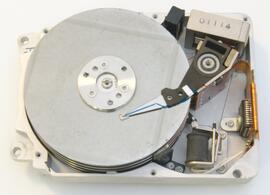
It's a disque PC IDE 850 Mbytes.
Computing and computers
260 Archival description results for Computing and computers
It's a disque PC IDE 850 Mbytes.
It has been introduced at CERN in 1994 and used until recently in the DEC TL820 robot. It has a capacity of 10 GB and 1.25 MB/s.
Intel’s first dual-core Itanium processor, code-named "Montecito" is a major release of Intel's Itanium 2 Processor Family, which implements the Intel Itanium architecture on a dual-core processor with two cores per die (integrated circuit). Itanium 2 is much more powerful than its predecessor. It has lower power consumption and thermal dissipation.
It was essentially a folded sheet metal box with an internal circuit board, but Gandalf Box was a form of modem, a terminal host selector that allowed computer terminals to connect to a number of computers, Host computers via a single interface. Gandalf Technologies was a Canadian data communications company based in Ottawa. It was best known for their modems and terminal adapters. The rapid development of ethernet, remote access and subsequent high-speed connections killed technology and the company went bankrupt in 1997.